Most feedlots automate one part of feeding. Here's what happens when you automate the whole thing.
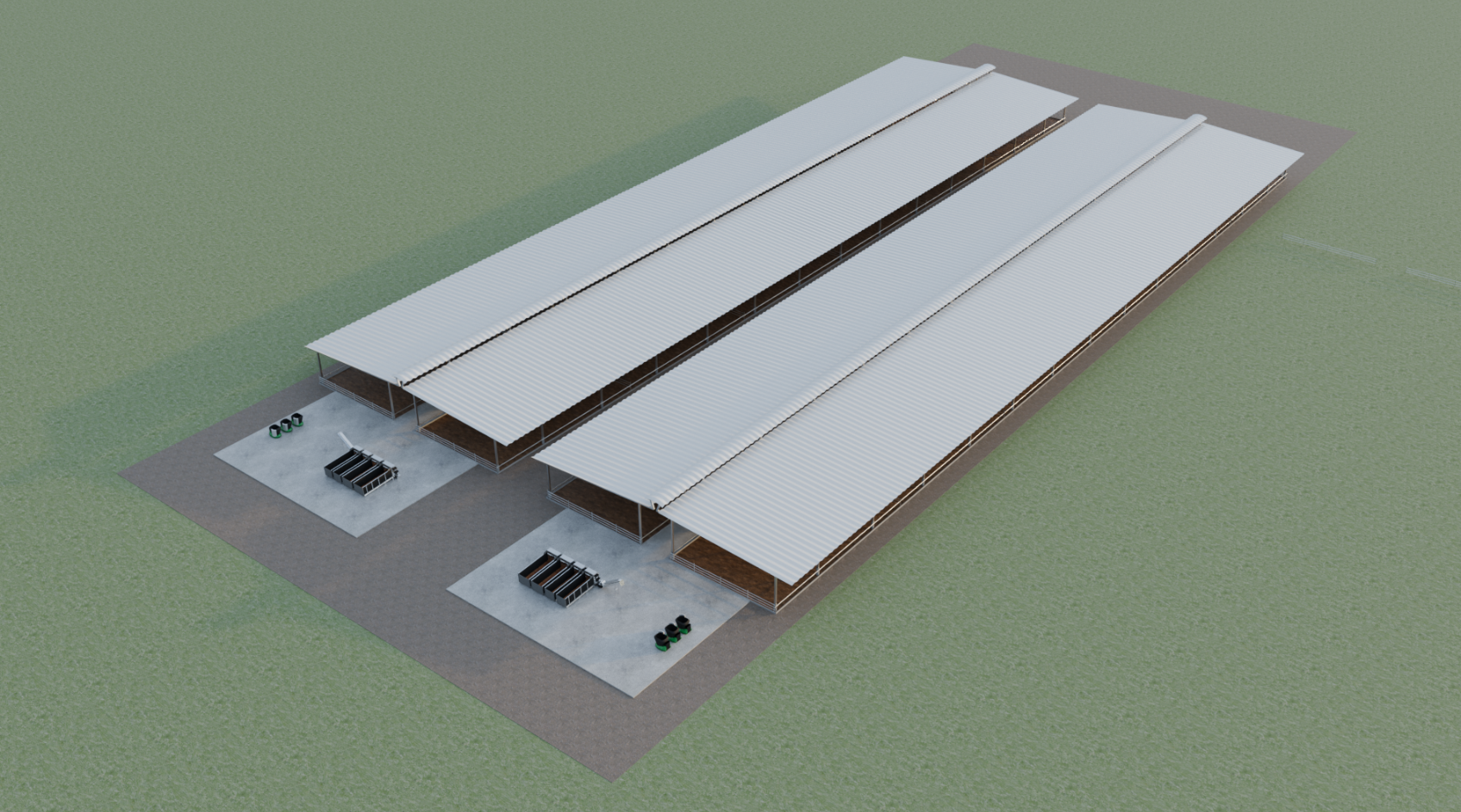
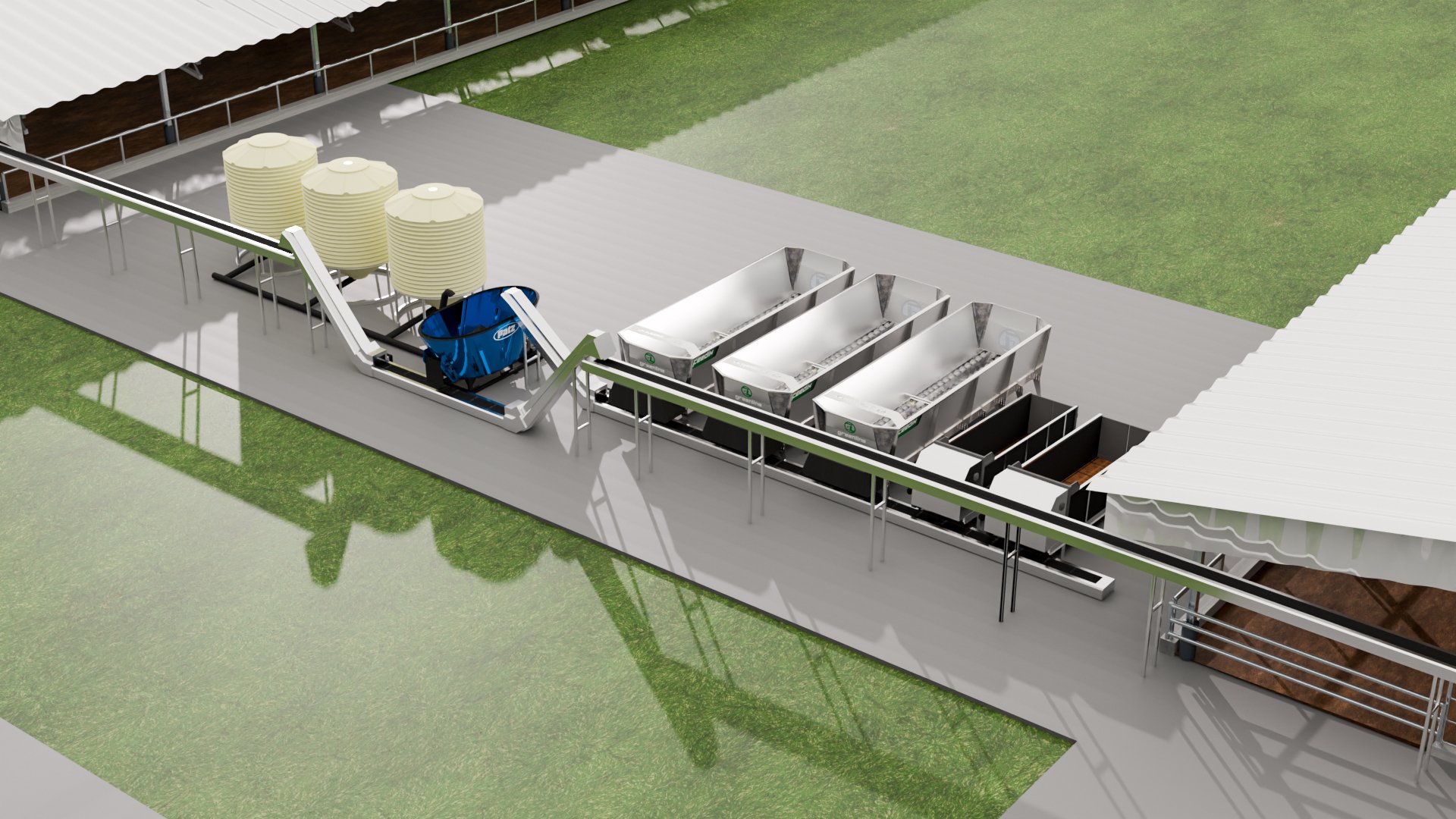
The Greenline complete system — from commodity storage to bunk delivery. Distributed in Australia by DOM Distribution.
Labour costs are up. Staff are harder to find and harder to keep. And feeding — the most time-critical job on any feedlot — still depends on someone showing up twice a day, every day, regardless.
Automated feeding robots get a lot of attention, and they deserve it. But a robot doing its job well depends entirely on what's happening around it. If roughage still gets handled manually every morning, if ration mixing still relies on someone being present — you've automated one part of a problem and left the rest intact.
The Greenline system, distributed in Australia by DOM Distribution, is built around a different approach: automate the whole workflow, and build in only what your operation needs right now.
Roughage stored and ready — without daily bale handling.
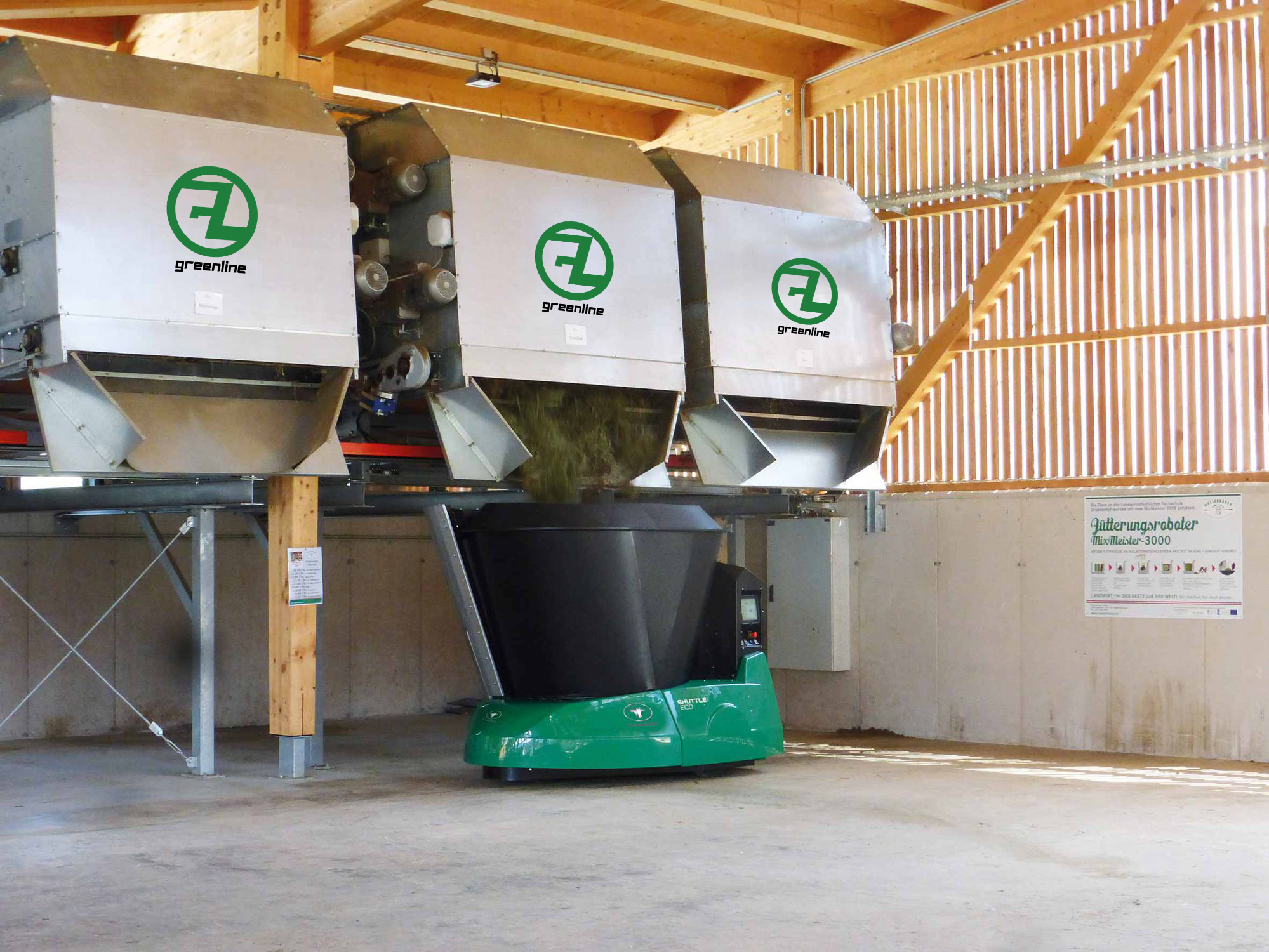
Roughage goes through automated processing — consistent grind length, contaminants removed, dust suppressed. The processed material feeds into Greenline MyPorts or QStore Commodity Boxes, which hold multiple days' worth of ingredients. Filling a port might happen once every few days. Between fills, the system draws from it automatically — no one needs to be there.
Fresh feed at the bunk, multiple times a day.
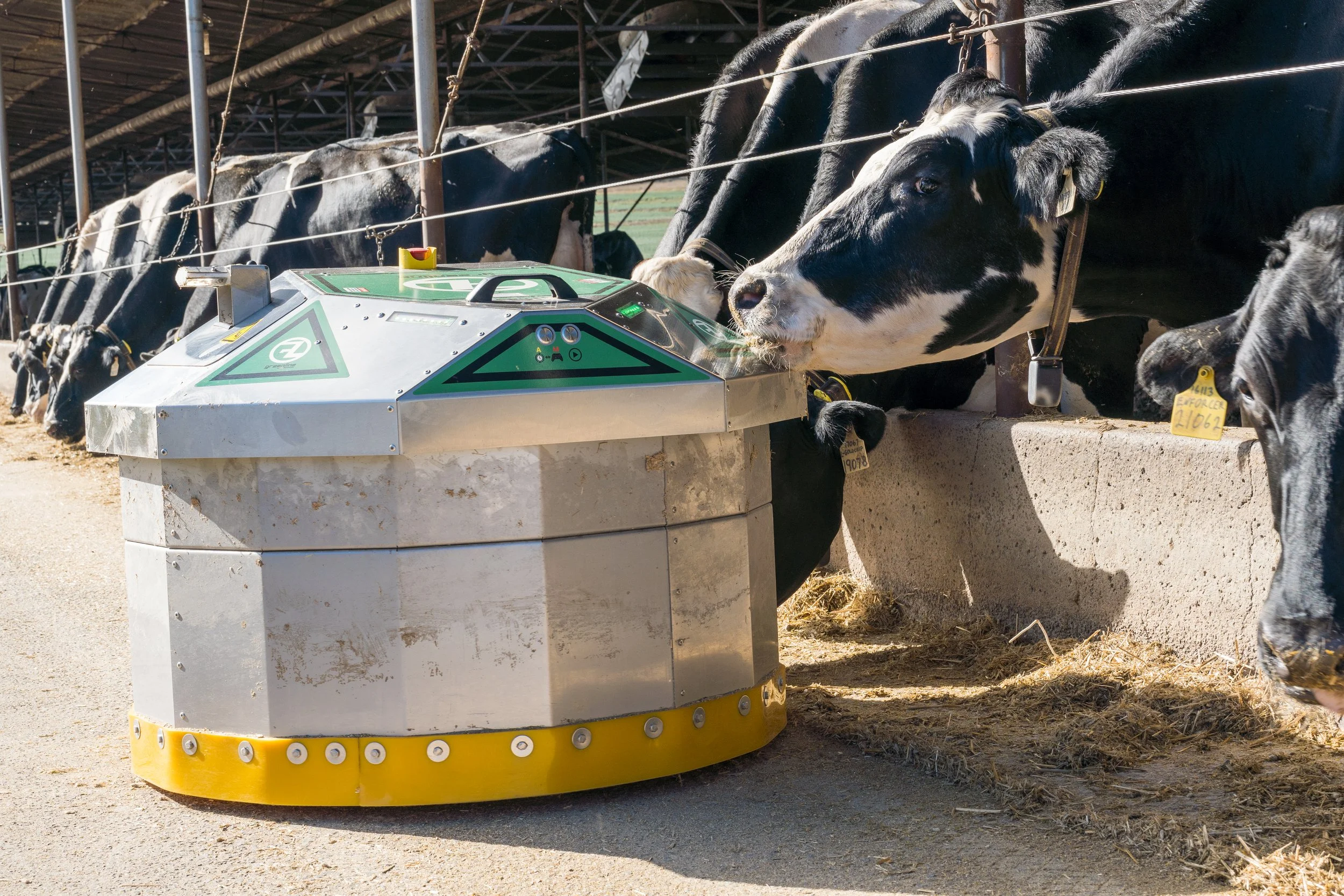
Shuttle Eco robots collect mixed rations and deliver them to each pen, multiple times a day, 365 days a year, on battery power. An integrated feed pusher keeps feed within reach of livestock between passes — no loader, no staff in the shed. Each pen gets its own ration. The operation runs the same whether it's 6am or 2am.
As your operation grows, so does the system.
Once the core feeding workflow is running, commodity receival is the next step toward removing manual handling entirely. With Greenline's drive-over Transloader, commodities tip directly from the truck into the intake system — the driver pulls over the belt and leaves. No loader operator, no coordination, no extra staff on-site. Conveyors move material straight into storage. It's an addition that makes sense when the volume justifies it.
"I don't have to worry anymore about getting out and manually pushing up feed — the robot's out there doing the job for me."
The result is a feedlot where the feeding shift disappears from the roster. Rumen health improves because feed arrives consistently and frequently. Daily weight gains increase. Injury risk drops for both staff and animals.
Greenline's Advantage Series packages this into modular kits scaled to herd size — from under 1,000 head with the Advantage Mini, up to 6,000-plus with the Pro Dual. Build what suits your operation now and expand as it grows.
What changes when the full system runs
- Rumen health improves through consistent, frequent delivery
- Labour costs drop — feeding shifts disappear from the roster
- Daily weight gains increase with optimised ration timing
- Injury risk falls for both staff and animals
- Individual rations mixed per pen, multiple times a day
- The operation runs the same at 2am as it does at 8am